


A used excavator inspection checklist covers seven areas: serial plate and hour meter, undercarriage, cold start, hydraulics, swing and travel, structure and bucket, and export papers. Check them in that order. The plate tells you which machine you are pricing, and by Caterpillar’s figure the undercarriage can account for more than half of an excavator’s maintenance costs. If you cannot be at the machine, each area below names the photo or video to ask for.
The used excavator checklist at a glance
The used excavator checklist below gives one row per area for anyone working out what to look for when buying a used excavator: the red flags that should change the price, and the evidence to request when you buy from another country.
| Area | What to check | Red flags | Ask for this if you are not there | Go deeper |
|---|---|---|---|---|
| 1. Serial plate and hour meter | Plate matches the frame stamp and the paperwork; hours match visible wear; monitor fault codes, lights and alarms | Plate missing or loose, serial differs from invoice, low hours on worn pedals and pins | Close photo of the serial plate, the hour meter, and the frame stamp | How many hours is a lot |
| 2. Undercarriage | Sprocket teeth, bushings, rollers, idlers, link count on both sides, shoes, track tension | Hooked sprocket teeth, leaking or flat rollers, cracked shoes, different link counts left and right | Close-ups of both track frames, sprockets and idlers in daylight, and a photo of a tape across five links on each track | Undercarriage wear signs |
| 3. Cold start, engine and fluids | Starting from cold, exhaust smoke, noise, blow-by, oil and coolant condition | Hard start, heavy blue or black smoke, oil in coolant, strong blow-by | A cold-start video that begins before the key is turned | Engine burning oil |
| 4. Hydraulics | Speed of every function, cylinder drift, leaks at rods, hoses, pump and swivel | Slow or jerky functions, boom that settles while held, wet hoses or pump | A video of every function under load, with the bucket full | Hydraulic system checks |
| 5. Swing and travel | Full rotation both ways, swing bearing play, straight tracking, final drives | Clunk when swing stops, machine drifts to one side, oil around the final drive | A travel video in both directions and a full swing each way | Final drive checks |
| 6. Structure, pins and bucket | Cracks and welds on boom, arm and frame, pin and bushing play, bucket wear | Fresh welds, cracks near pin bosses, visible play when the bucket is rocked | Close-ups of boom and arm welds, pin bosses and the bucket edge | Repainted excavator signs |
| 7. Papers and export | Invoice, serial number in writing, documents your customs office requires, shipping method | Serial not written on the invoice, seller vague about who handles export | Draft invoice with the serial number, and the export document list | Import requirements by destination |
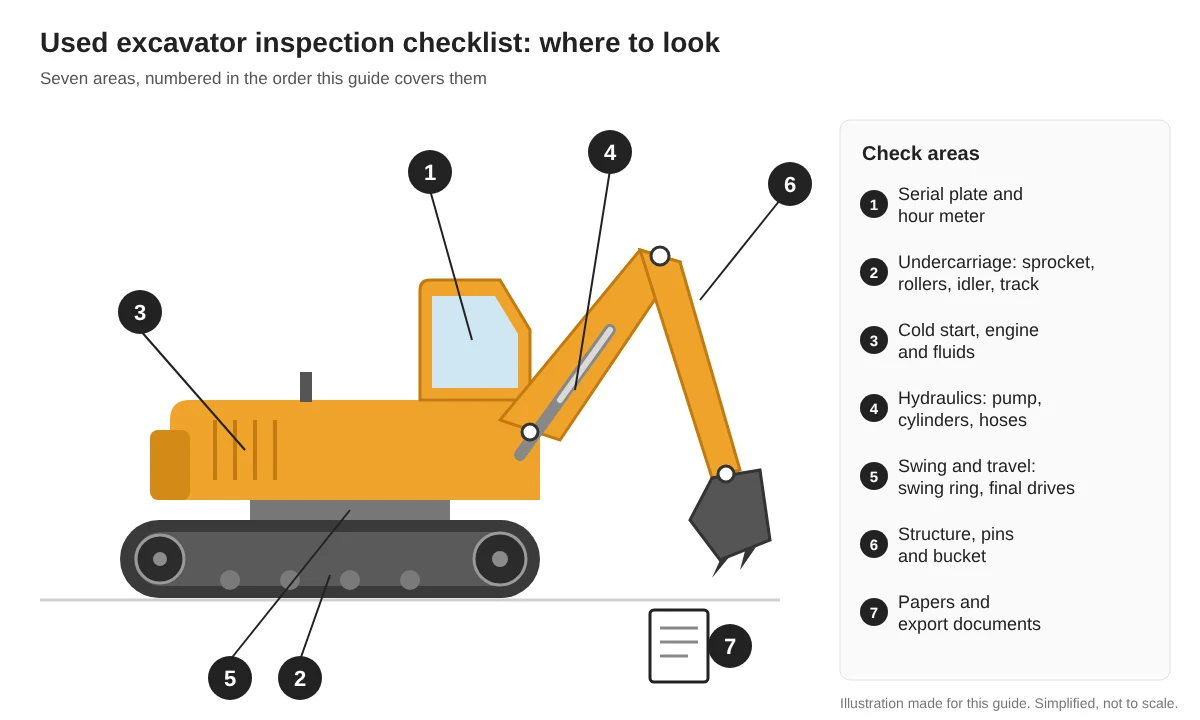
1. Serial plate and hour meter
The serial plate is the first check because every later finding has to belong to the same machine. ISO 10261 sets out the product identification number (PIN) system for earth-moving machinery, including where the number is placed. Read the plate, compare it with the invoice and any service records, and if the frame also carries a stamped number, check that it matches.
Then read the hour meter against the machine. Low hours on a cab with worn pedals, a shiny seat and polished bucket pins do not add up. Our guide to how many hours is a lot for an excavator gives the ranges, and hour meter fraud warning signs covers the tricks to look for.
While you are in the cab, check the monitor for warning lights and stored fault codes, test the lights, horn, travel alarm, wipers and air conditioning, and look for frayed or spliced wiring. Caterpillar’s buying tips for used excavators include checking wiring for damage or frays, testing the lights, and confirming that safety features and alarms work.
Check the model code as well. A machine built for another market can be harder to support with parts and dealer service where you work; our grey-market excavator guide explains how to tell.
We photograph the serial plate and the hour meter of the machine for every buyer who enquires.
2. Undercarriage
The undercarriage deserves the longest look on a used crawler excavator. Caterpillar’s own maintenance article (dated 15 January 2025) says undercarriage problems can account for more than half of an excavator’s maintenance costs.
Work along each track frame and check:
- sprocket teeth: hooked or pointed teeth mean heavy wear
- bushings riding high on the sprocket
- bottom rollers that leak, have flat spots or worn flanges, and carrier rollers that do not turn
- idler position in the track frame
- track shoes: width, loose bolts and cracks
- link count on both sides, which should match
- track tension, with even sag on both tracks
A commenter writing in May 2026 advised looking at the undercarriage before paint, hours or a clean cab, and put link count on both sides, sprocket and bushing wear, idler position and roller leaks among the first checks. The same commenter warned that one model family can carry different undercarriage configurations, so a 51-link chain priced for a machine that needs 53 links usually cannot be used. Write down the link count and shoe width before you price any replacement parts.
Caterpillar’s undercarriage article describes measuring track wear by running a tape across five links and entering the reading into Custom Track Services to calculate wear. If you cannot be at the machine, ask for a photo of a tape across five links on each track with the reading visible, and compare it with the manufacturer’s wear figures before you agree a price.
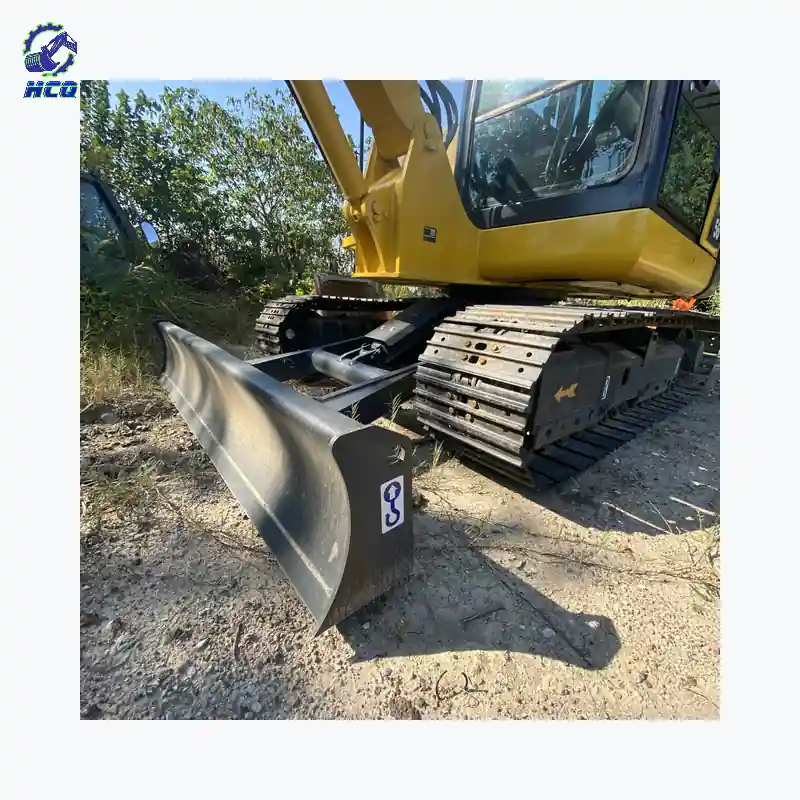
For what each wear pattern says about the hours, see undercarriage wear signs that reveal fake hours.
3. Cold start, engine and fluids
A cold start shows engine faults that a warm engine hides: hard starting, smoke in the first minute and knocks that fade as the oil thins. Ask the seller not to start the machine before you arrive or before the video begins.
When a buyer asks for a cold start, we do not run the engine beforehand; the first start happens on the video or in front of the buyer.
Watch and listen for:
- how long the starter turns before the engine fires
- exhaust smoke: heavy blue smoke points to burning oil, black smoke under load points to fuel or air supply problems (our engine burning oil guide explains each color)
- blow-by: with the engine running, loosen the oil filler cap; strong, steady fumes suggest worn rings
- oil on the dipstick that looks milky, and oil traces in the coolant
An oil sample shows what a visual check cannot. Caterpillar’s S·O·S fluid analysis samples oil for metals, viscosity, particle count and contamination. Results take time, so take the sample early if the seller allows it.
4. Hydraulics
The hydraulic check means running every function and watching speed, smoothness and leaks. Caterpillar’s used excavator buying tips tell buyers to inspect the cylinders, lines and pump and make sure there are no visible leaks.
- Run boom, arm, bucket, swing and travel, first empty and then with a full bucket. Functions should be smooth, without jerks or long pauses.
- Raise the loaded boom, stop, and watch whether it settles. A boom or arm that drifts down points to internal leakage in a cylinder or valve.
- Look for oil on cylinder rods, hose ends, the main pump and the center swivel joint under the swing ring.
- Ask when the machine was last washed. A freshly washed machine can hide seepage that would show after a day’s work.
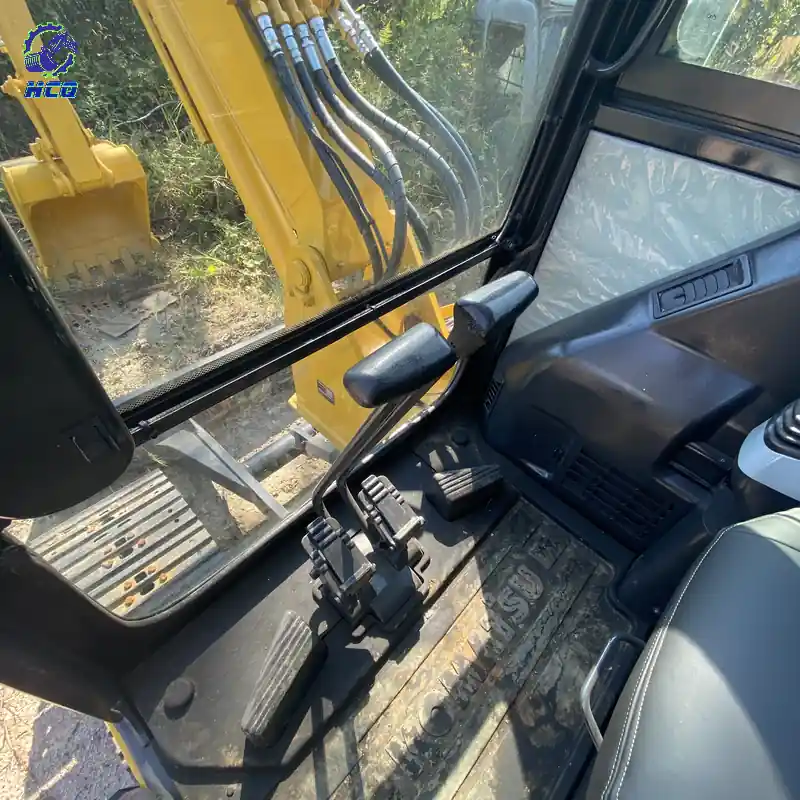
Our hydraulic system checklist goes through pump, valve and cylinder tests in more detail.
5. Swing and travel
Swing and travel need separate checks because each has its own expensive parts: the swing motor and bearing, and the final drives.
- Swing a full turn in each direction. Listen for clunks when the swing starts or stops, and watch for jerky rotation.
- Press the bucket down until the front of the tracks lifts, then watch the swing ring for movement between the upper frame and the undercarriage.
- Travel straight in both directions at both speeds. A machine that pulls to one side may have a weak final drive or travel motor.
- Look for oil around the final drive covers and the swing motor.
For the leak patterns, see swing motor leak signs and final drive checks.
6. Structure, pins and bucket
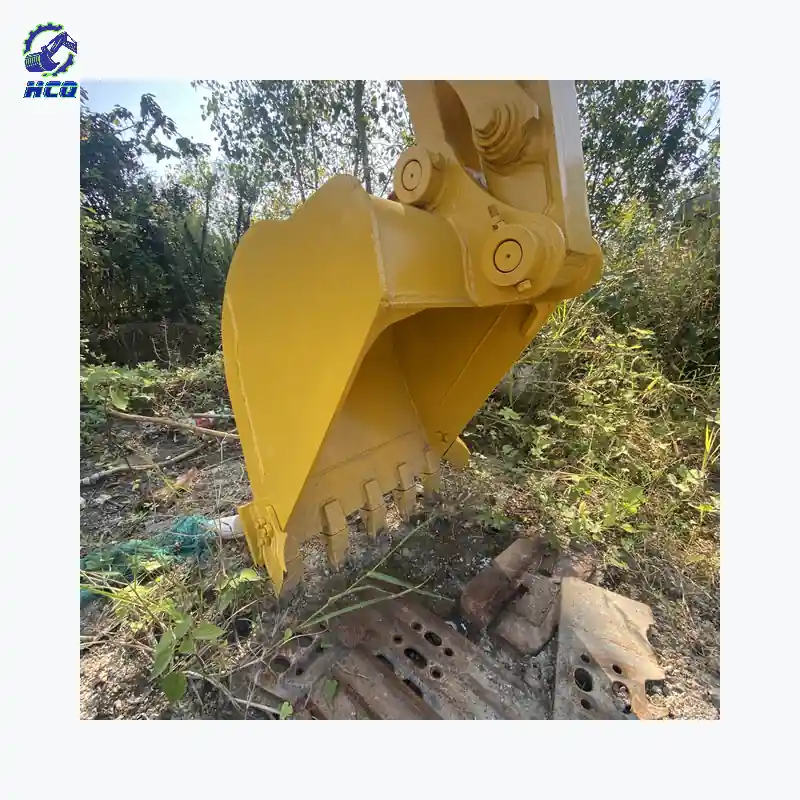
The structure check looks for cracks, repairs and wear on the boom, arm, frame and bucket. Caterpillar’s buying tips tell buyers to check that all welded areas are intact.
- Look along the boom and arm, around the pin bosses and the frame near the swing bearing for cracks and fresh welds. A repair weld is not always a problem, but you should know where it is and why it was made.
- Rock the bucket and watch the pins and bushings for play.
- Check bucket teeth, adapters and the cutting edge.
- Fresh paint over one area deserves a closer look; see how to tell if a used excavator is repainted.
7. Papers and export
The export papers come last in the inspection, but a missing document can hold a sound machine at the port. Before you pay, confirm in writing:
- the serial number on the invoice, matching the plate you photographed
- the documents that travel with the machine: commercial invoice and packing list with the serial number, and the bill of lading once it ships
- any pre-shipment certificate of conformity your destination requires. Under Kenya’s PVoC Manual Version 15, used goods are certified only after they are tested and physically inspected, and the certificate must be issued before the machine ships; our import requirements by destination covers the certificate, emission and tax rules for the destinations we have checked
- how payment is staged against inspection and loading; see L/C, T/T and escrow compared
- the engine emission tier, where your market checks it; see Tier 3 vs Tier 4 used excavators
- how it ships: container, flat rack or RoRo; our guide to shipping an excavator in a container covers what has to come off the machine
What a video can prove, and what needs someone at the machine
A video inspection can cover much of this checklist, but some checks need a person at the machine with a tape, a gauge or a hand on the bucket.
| Area | A video or photo can show | Needs someone at the machine |
|---|---|---|
| Serial plate and hour meter | Plate, hour reading and frame stamp, matched to the invoice | Reading a frame stamp that is under paint or dirt |
| Undercarriage | Sprocket, roller and idler close-ups, track sag, leaks | Measuring bushing wear, checking the seller’s five-link reading, counting links on both sides |
| Engine | Cold start, smoke, sound at idle and under load | Blow-by volume, an oil sample sent to a lab |
| Hydraulics | Cycle speed, smoothness, visible leaks | Timed cylinder drift, pressure readings |
| Swing and travel | Full swing each way, straight travel at both speeds | Swing bearing play, final drive noise under heavy load |
| Structure, pins and bucket | Welds and cracks in close-up, bucket edge | Feeling pin play, checking cracks after cleaning |
A clip proves condition only if it shows which machine it is. Ask for each video to be one continuous take that starts on the serial plate and moves to the part being shown without a cut, or ask for a live video call in which you name the parts to film. A clip that never shows the plate could be any machine of the same model.
The commenter cited in the undercarriage section said they would ask a remote seller for a slow walk-around video, plate and hour meter photos, close-ups of both track frames, and a running video of travel, swing, boom, arm and bucket under load. In their words: “A machine that only idles in a yard video has not really been inspected.”
A commenter replying in June 2026 to a question about buying from China advised asking for evidence on the exact unit: PIN and engine plate photos, a cold-start video before warm-up, undercarriage close-ups, component tag photos if anything looks wrong, and the export documents. The commenter said they would not pay until the seller supplied a machine-specific inspection file and clear warranty or return limits.
We send walk-around videos, cold-start videos and close-up photos of any area you ask to see.
For a shot list, see what a used excavator inspection video should include and how to inspect a used excavator remotely. A third-party inspection covers the “Needs someone at the machine” column when you cannot travel. Where the price depends on one of those measurements, pay for someone to take it.
Inspecting in person at the HCQ Machinery yard in Hefei
A visit to the HCQ Machinery yard in Hefei lets you take every measurement in the “Needs someone at the machine” column yourself. Buyers are welcome to inspect any machine in our yard in Hefei in person. We mark the yard with custom flags from Senior Flags, so the excavator, loader and roller rows are easy to spot from the gate.
Bring:
- a printed copy of this checklist
- a flashlight and a rag for wiping plates and welds
- a tape measure, and a track wear gauge if you have one
- a phone for photos and timing cycle speeds
- work boots
Tell us which machines you want to see, and ask for them not to be started before you arrive.
After delivery: record a baseline in the first week
A delivery baseline gives you something to compare against when a fault appears later, and it is the record a warranty or parts discussion starts from. In the first week, record:
- the hour reading on the day the machine arrives
- photos of both track frames, sprockets and idlers
- link count and shoe width, so parts orders match the machine
- cycle times for boom up, arm in and a full swing
- an oil sample from the engine and hydraulic tank, if a lab is available near you
Keep these with the invoice and the photos you received before payment.
Frequently asked questions
Is a daily pre-use checklist the same as a pre-purchase inspection?
No. A daily pre-use checklist is what an operator walks through before each shift: fluid levels, lights, guards, leaks and controls. A pre-purchase inspection looks for wear and history that set the price, such as undercarriage wear, engine condition and repairs. Use the daily checklist on the machine you own, and this checklist on the one you are thinking of buying.
What if a seller will not do a cold start or film the machine under load?
A seller who will not do a cold start or film the machine under load is withholding the two clips that show engine and hydraulic condition: price that risk in, or walk away. Both take a seller a few minutes to record.
Do I need a third-party inspector?
A third-party inspector is worth paying for when you cannot travel and the price depends on measurements. Inspection companies publish general rates of USD 268 per man-day at V-Trust and from USD 245 per man-day at Bureau Veritas when booked 15 days ahead; those are product-inspection rates, not a quote for a used machine. An inspector can measure undercarriage wear, check cylinder drift and photograph the serial plate on your behalf. Our third-party inspection guide explains what it covers and what it costs.
The common mistake: pricing a machine from its listing photos
The common mistake when buying a used excavator is to agree the price from the listing photos. Listing photos show paint, a clean cab and a full-length side view. The parts that cost the most to fix (sprockets, rollers, final drives, the main pump) rarely show clearly in a wide shot. Use the photos to build a shortlist, then set the price only after the cold start, the loaded working video and the undercarriage close-ups.
To ask for those clips on a machine you are considering, contact us with the model and the areas you want to see.
Last reviewed: 16 November 2026 · Prepared by HCQ Machinery’s export team
Drafted with AI assistance and checked on 16 November 2026 against the ISO, Caterpillar and KEBS pages linked above. The statements about our own inspection practice were confirmed by HCQ Machinery on 4 November 2026, and forum comments are paraphrased from the linked threads. The diagram is an illustration; the photographs are from our listing of a used Komatsu PC56.


